We previously wrote about how weighted blankets and weighted hoodies pulled in millions in sales. But today we’re zooming in on the next big extension in the weighted lineup: weighted plush toys. Smart sellers are building a whole weighted comfort universe, from blankets for sleep, hoodies for lounging at home, plush toys to hug at desk, and even travel-ready weighted eye masks and scarves.
How to Turn Weight Into Profits
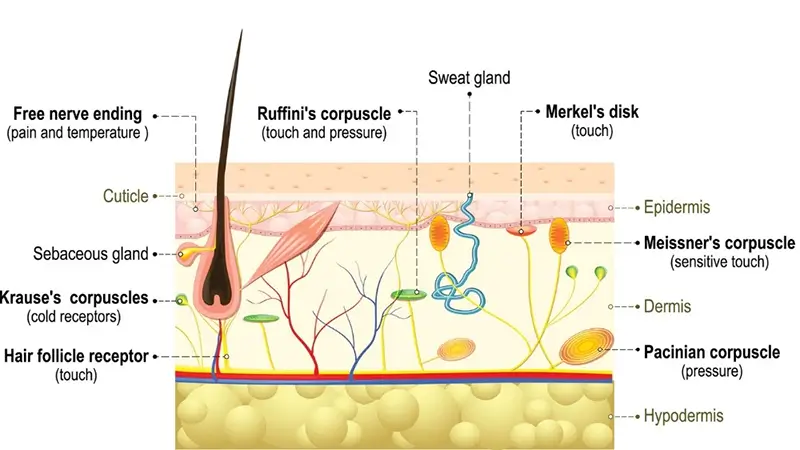
Weighted plush toys, as the name suggests, are regular stuffed animals with added weight. They’re filled with high-density materials like glass beads, plastic pellets, or natural grains, usually 3 to 5 pounds, distributed evenly to create gentle, consistent pressure. This tactile pressure stimulates the parasympathetic nervous system, lowering cortisol and boosting serotonin and dopamine to calm the mind.
The science behind it, called Deep Pressure Therapy, is exactly the same principle we saw with weighted blankets and hoodies. That’s why these products have found their way into so many use cases: easing anxiety and stress, improving sleep, supporting kids with ADHD or sensory needs, or providing emotional comfort for adults.
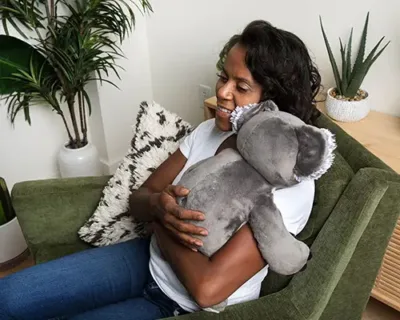
The best part about weighted plush toys is people can actually feel the hug. Adding that weight lets sellers charge at least 2x the price of a regular toy.
Copy Top Weighted Plush Brands’ 0-to-1 Formula
Weighted plush toys bring science-backed comfort and functional value to the emotional support toy market. This isn’t a blank space. Though niche, demand has been steadily growing since the late 2010s, starting with handmade versions on Etsy, with typical price points above $100.
After digging into almost every successful weighted plush brand, we found a common thread. They are all really selling a hug-anytime sense of security. Their 0-to-1 path follows a repeatable formula:
Identify a real pain point → Use design and storytelling to hit emotions → Scale through a smart supply chain.
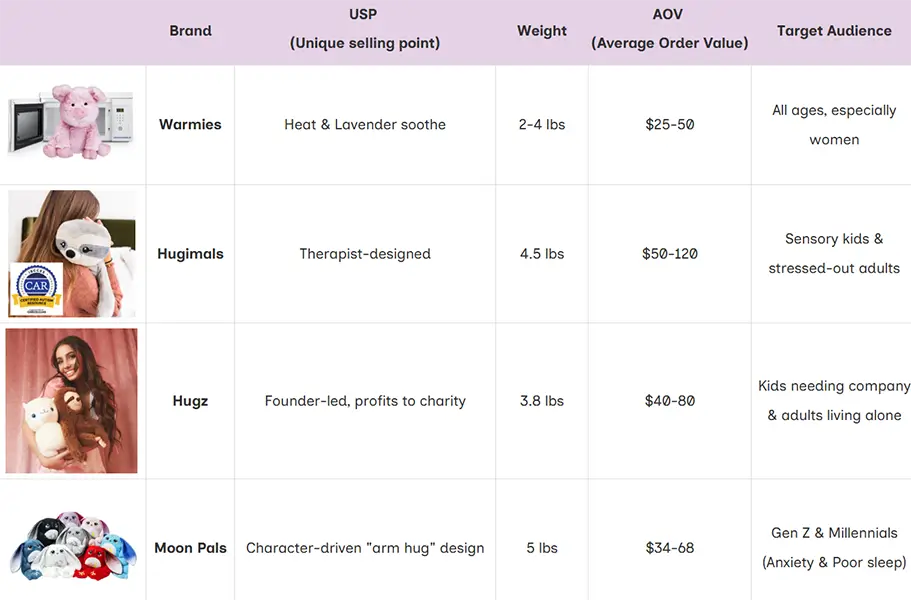
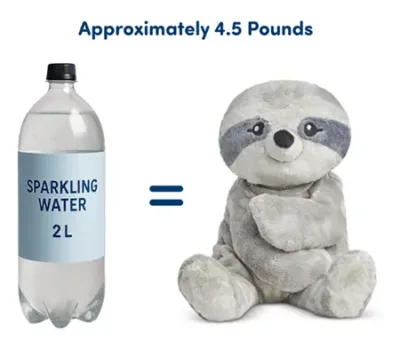
Founder Marina Khidekel is a former journalist and editor with years of experience covering mental health. She noticed a gap in the market: adults struggle with anxiety but they don’t want to hug a kid’s toy. This shaped the product direction—minimalist, gender-neutral design, adult-friendly weight of 4–5 pounds, machine-washable, and therapist-approved.
To nail that 4.5-pound, therapist-approved hug feel, Marina collaborated with psychologists, occupational therapists, pediatricians, and toy designers to fine-tune the weight, shape, and distribution so it feels like a real, comforting embrace.
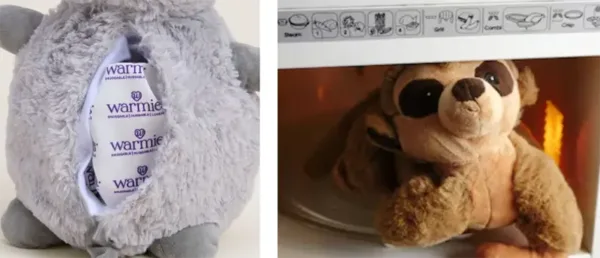
Warmies started with microwavable plush toys. Their audience is broad, from women seeking relief during menstrual cramps, to insomniacs and sick children in winter. The filling is treated lavender and grains, making warmth and aromatherapy the core selling points. This also means a very different supply chain. Fillings have to pass microwave safety testing, resist moisture and mold, and storage and packaging must prevent dampness.
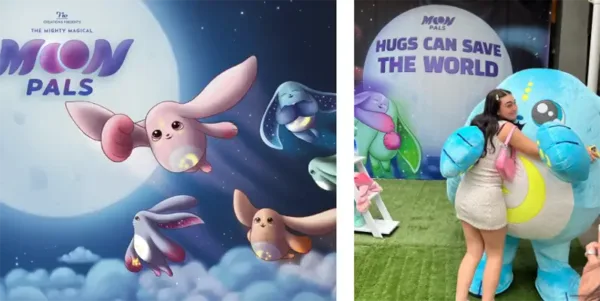
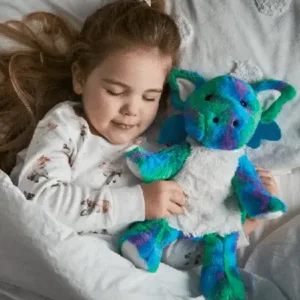
They created a whole personality-driven moon IP (characters like brave, confident, kind, etc.) so customers can connect emotionally, like having a little friend with a “personality” that matches their feelings. The arms and legs are designed to wrap around the body. The secret to keeping the toy from sliding off comes from how it’s built with separate compartments for each limb, spreading the weight across arms and legs.
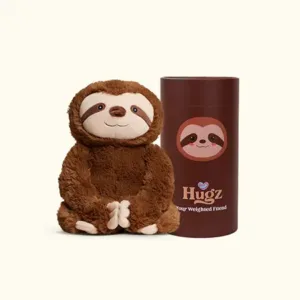
Hugz leans hard into the hug concept. So the weight concentrates in the torso for maximum deep pressure on the chest/back, which helps full-body calm. Its simpler internal structure with a single large weight compartment keeps production costs lower.
Turn specific scenarios into perfect weighted solutions
The real edge for weighted plush toys comes from designing for specific scenarios.
Mini/journal versions for kids
Smaller size (8–12 inches), lighter 1–2 lb weight for easy handling by tiny hands, and reinforced stitching to prevent bead leakage during play or dragging. Perfect for bedtime calm or on-the-go soothing.
Flat, heatable designs for period cramps & abdominal discomfort
The design shifts to a flat, belly-laying posture. To make it work, the filling material is usually a microwavable inner pouch (usually grain or clay beads) that provides steady heat.
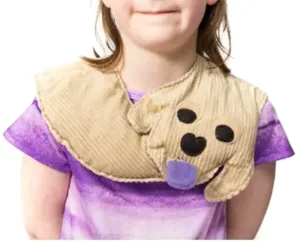
Shoulder-wrap styles for ADHD & focus
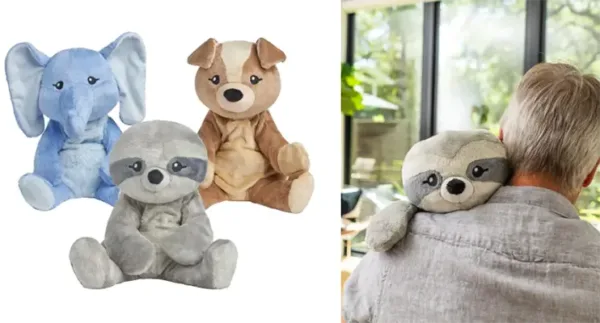
Curved shape that drapes over shoulders or rests on the lap. Weight shifted forward with anti-slip features and multi-pocket stability to prevent sliding during movement. Helps with fidgeting and concentration without feeling clinical.
Quiet office/desk versions for adult stress relief
Low-profile, neutral colors that sit discreetly on a desk or lap (3–4 lbs typical). Subtle deep pressure during calls or deep work, appeals to professionals wanting discreet calm.
Custom pet replica plushes for grief/emotional support
Realistic replicas of past pets, filled with weighted pellets, optional ash pouches, heartbeat sounds, or memory compartments. Prices range from $100–$200+.
What to Know Before Customizing Weighted Plush Toys
Weighted plush toys follow the same plush toy production process, with extra steps to incorporate weighted filling. Here’s what that involves:
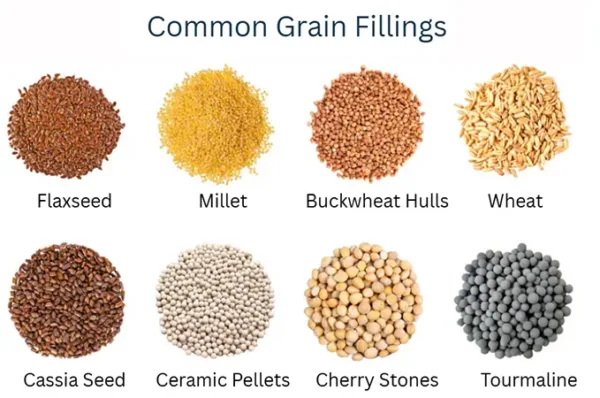
Pick the right high-density filler: glass beads, plastic pellets, or natural grains.
Plan the weight distribution: whether concentrated in the torso or spread across limbs.
Handle inner bags and leak-proof or removable designs to make cleaning and swapping fillings easy.
The supply chain isn’t complicated, but the key is understanding how materials, structure, and weight affect feel, comfort, and cost.
How to choose weight (2lb? 3lb? 4lb?)
Weighted plush toys follow the same Deep Pressure Stimulation principle as weighted blankets and hoodies. Usually, the weight is around 5–10% of the user’s body weight, most commonly about 10%. On the market, kids’ versions usually weigh 1.5–3 lbs, light enough for little hands. While adult versions typically fall in the 3–5 lbs range.
Removable or fixed filling?
Most weighted plush toys on the market fall into three types:
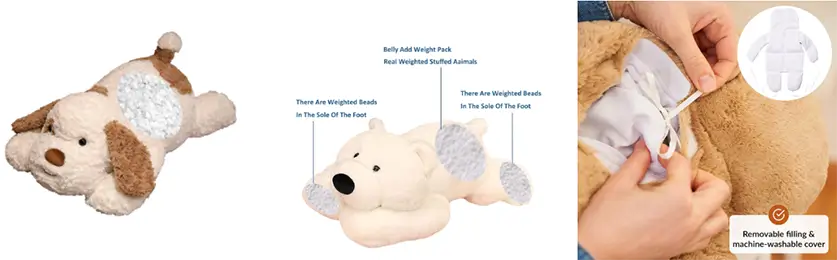
Single large pouch: Weight is concentrated in the tummy, usually with plastic pellets. Simpler design means lower production cost compared to glass beads.
Multi-compartment pouch: Weight is spread across the limbs, keeping the toy balanced and preventing it from sliding. More comfortable for hugging.
Modular removable pouches: Limbs separated and the inner pouch can be removed. Makes cleaning or swapping fillings easy—think glass beads, microwavable grains for heat, or scented fillers.
How different fillings affect the feel
When choosing plush toy’s stuffing material for weighted plush toys, the type of filler directly affects the feel, weight, and overall experience.
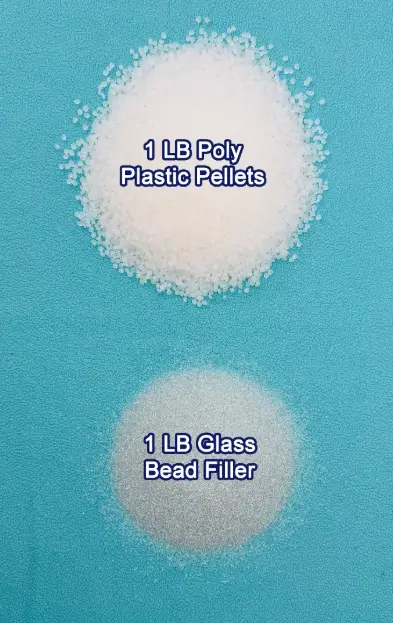
Micro glass beads commonly 1.0–2.0 mm for weighted plush toys. They provide a smooth, consistent feel and are more than twice as heavy as plastic pellets, which also makes the toy quieter when hugged. Poly pellets are usually 2–4 mm. Cheaper than glass, lighter, and works well for bigger toys without feeling too hard or stiff.
Certifications
Weighted plush toys need more than the usual stuffed animal certifications. In the U.S., that means CPC (ASTM F963 / CPSIA), while in Europe it’s CE (EN71). Products with microwavable fillings, like Warmies, require extra safety approvals—such as BS 8433:2004 in the U.K. and NB Toys Protocol No. 5 in Europe. Glass bead fillings should ideally pass SGS and FDA material safety tests, while plastic pellets are best BPA-free certified.
Subscribe
Subscribe to us to see more case studies like this one, plus startup stories, China sourcing stories, product ideas, insights, , and practical tips.
Wholesale and Customize
Have great product ideas but not sure where to start? Or maybe you’re looking to buy products in stock, add your logo, customize packaging, or place a small order for quick testing?
Share your ideas. Get affordable, and effective sourcing solutions!